
 EN
EN
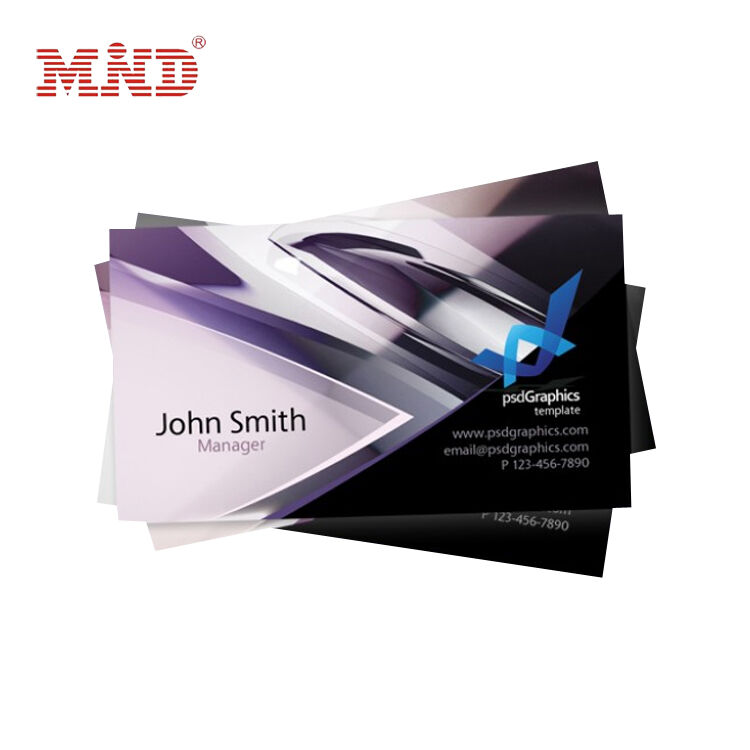
The Strategic Advantage of Waterproof Business Cards
Meeting real-world durability demands in high-moisture environments (hospitality, field sales, outdoor events)
A standard paper business card disintegrates after a single spill or rain shower. Waterproof PVC cards survive these conditions without smudging, curling, or tearing. In high-moisture settings—hospitality where drinks are served, field sales in unpredictable weather, or outdoor trade shows—durability is not a luxury; it is a necessity. A card that remains pristine after repeated exposure to moisture proves its value immediately. Staff no longer need to reorder replacements weekly, and clients never receive a soggy, illegible card. This reliability directly supports operational efficiency and customer satisfaction in environments where first impressions happen fast.
How water resistance strengthens brand perception—linking material integrity to trust and professionalism
A business card’s physical quality communicates the company’s own standards. When a card stays crisp and intact despite being in a wet pocket or handled with damp hands, it signals attention to detail and investment in quality. Recipients subconsciously associate that resilience with the brand behind it. Waterproof PVC cards project preparedness and professionalism—telling potential clients your business values longevity and performance, not shortcuts. Over time, carrying a card that never degrades builds trust and reinforces a reputation for substance over appearance. The material becomes an unspoken endorsement of the brand’s reliability.
PVC Substrate: Unmatched Durability and Print Performance for Business Cards
Mechanical superiority: Flexural strength and impact resistance vs. paper, PET, and coated cardstock (ASTM D790 data summary)
When specifying a business card substrate for high-use environments, mechanical properties directly influence lifespan. PVC (polyvinyl chloride) cards deliver a flexural modulus of 2,500–3,500 MPa per ASTM D790—roughly 1.5 times higher than PET and an order of magnitude greater than paper or coated cardstock. This means PVC resists bending, tearing, and edge chipping even after repeated pocket wear. Impact resistance is equally strong: PVC cards can survive accidental drops and crush loads that would delaminate paper or shatter PET alternatives. Field data from hospitality and outdoor event staff shows PVC cards lasting three to five years without visible warping, whereas paper versions often fail within weeks in moist conditions. ASTM D790 testing consistently ranks PVC as the top performer among standard card materials for load-bearing and flexural fatigue.
Print-ready surface: Embossing fidelity, ink adhesion, and compatibility with digital and offset business card printing
PVC offers a smooth, non-porous surface that accepts high-resolution printing with exceptional fidelity. Digital printers—both dye-sublimation and direct-to-card—produce sharp text, vivid logos, and fine halftones without ink bleeding. Offset printing achieves consistent registration and dense color saturation, while embossing dies create crisp raised lettering that remains legible after hundreds of handling cycles. UV-cured and solvent-based inks bond firmly to PVC, resisting rub-off and moisture damage. This compatibility extends to spot UV coating, foil stamping, and serial numbering. PVC also supports dual-sided printing with no show-through—ideal for designs requiring detailed information on both sides. As a result, waterproof PVC business cards combine mechanical toughness with a print-ready canvas that meets the demands of both digital and offset production workflows.
Balancing Longevity and Sustainability in Modern Business Card Design
Lifecycle analysis: How extended usability of PVC business cards reduces replacement frequency and total environmental impact
Choosing PVC for business cards advances sustainability through longevity. Traditional paper cards have a brief lifespan—most discarded within weeks—driving resource depletion and waste accumulation. Waterproof PVC cards endure daily wear, moisture, and physical stress, maintaining integrity for years rather than months. Their mechanical resilience directly translates to fewer reprints over time, shrinking the printer-to-landfill throughput. Fewer cards created means reduced raw material extraction, manufacturing emissions, water use, and end-of-life waste. Durability becomes an environmental strategy: strong cards aren’t replaced, eliminating unnecessary demand during a professional’s typical career span.
This extended usability pairs operational savings with tangible ecological benefit. As sectors shift toward circular economies, product durability emerges as a core sustainability pillar. Selecting resilient materials like PVC creates immediate impact—professional networking tools no longer compromise planetary health for functionality. Each durable card issued represents diminished cumulative demand on fragile ecosystems. Sustainability considerations must include how long products last, not just their composition. PVC business cards represent a convergence of practicality, brand integrity, and responsible resource stewardship.
Practical Implementation: Choosing and Specifying Waterproof PVC Business Cards
For professionals ready to adopt waterproof PVC business cards, several factors ensure the final product meets both functional and aesthetic expectations. First, specify card thickness—30 mil (0.76 mm) is standard for durability and compatibility with card readers, while thinner 20 mil options work for budget-conscious projects but sacrifice rigidity. Second, choose the finish: matte reduces glare and fingerprints; gloss enhances color vibrancy and contrast. Third, verify print method compatibility—digital and offset printing deliver sharp details and smooth gradients, whereas screen printing offers durable, thick layers for tactile effects. Fourth, consider security features such as holographic overlays, UV-visible inks, or microtext to prevent counterfeiting. Finally, confirm environmental resistance ratings—certified IP67 or equivalent guarantees protection against immersion and dust. Ordering samples from suppliers before bulk production allows you to test durability, print accuracy, and hand feel. By systematically selecting these parameters, you ensure your waterproof PVC business cards not only withstand moisture and wear but also elevate your brand's professional image.
FAQ
Q: What are the benefits of using waterproof PVC business cards?
A: Waterproof PVC business cards are highly durable, resistant to moisture, and maintain their pristine condition even in challenging environments. They project professionalism, improve brand perception, and reduce the need for frequent reprints, contributing to sustainability.
Q: How does PVC compare to paper and PET in terms of durability?
A: PVC outperforms paper and PET in flexural strength and impact resistance. It resists bending, tearing, and chipping, making it ideal for high-use environments where traditional materials fail.
Q: Are PVC business cards environmentally friendly?
A: While PVC itself is not biodegradable, its durability reduces the frequency of replacements and overall environmental impact. By lasting longer, PVC cards significantly lower waste and resource consumption in the long run.
Q: What printing methods are compatible with PVC cards?
A: PVC cards are compatible with digital, offset, and screen printing. They support high-resolution printing, embossing, UV-coating, and other advanced printing techniques without ink bleed or wear.
Q: What thickness is recommended for PVC business cards?
A: A thickness of 30 mil (0.76 mm) is standard for durability and compatibility with card readers. Thinner options, such as 20 mil, may be used for budget-conscious projects but compromise rigidity.